
The Paleontology program investigates the history of life as recorded in the fossil record of New Mexico and the American Southwest. Research spans more than 500 million years and includes studies of ancient ecosystems, evolutionary transitions, and the environmental drivers of extinction and diversification.
Museum paleontologists conduct extensive fieldwork, describe new fossil species, and curate one of the region’s most significant fossil collections. These specimens form the foundation for peer-reviewed research, exhibits, and educational programs that bring deep time into public view. Ongoing work addresses questions about climate change, biodiversity loss, and the long-term dynamics of life on Earth.
Paleontology overview
New Mexico has a fossil record that extends back to the late Cambrian, about 500 million years ago. Trace fossils, and plant, invertebrate and vertebrate fossils, are known from most of the geologic time periods preserved in New Mexico’s sedimentary rock record. Museum scientists, research associates, students and volunteers have actively collected fossils in the State from all of those time periods. The collections made are used in public programs, exhibits and for scientific research. The Museum’s collection is the single largest collection of New Mexico fossils and preserves many unique and scientifically significant specimens.
Curator Biographies

Spencer G. Lucas, Ph.D.
Curator of Paleontology
Spencer G. Lucas received a B.A. from the University of New Mexico (1976) and an M.S. (1979) and Ph.D. (1984) from Yale University. As a paleontologist and stratigrapher, he specializes in the study of late Paleozoic, Mesozoic, and early Cenozoic vertebrate fossils and continental deposits, particularly in the American Southwest. Lucas has extensive field experience in the western United States as well as in northern Mexico, Costa Rica, Kazakhstan, Nicaragua, Soviet Georgia, and the People’s Republic of China. He has published more than 1,000 scientific articles, co-edited 14 books, and authored three books.
Email: spencer.lucas@state.nm.us
Previous & Current Projects
Lucas’s scientific career began with research on Paleocene–Eocene mammals, particularly from the San Juan Basin, New Mexico. Field research by Lucas and his collaborators in the San Juan Basin during the last 35 years resulted in the collection of thousands of Late Cretaceous, Paleocene, and Eocene vertebrate fossils and led to major revisions of the lithostratigraphy and correlation of the Upper Cretaceous–Eocene strata in this region. Diverse research by Lucas on Paleocene–Eocene mammals resulted in major contributions to the taxonomy, evolution, and biostratigraphy of several groups, including condylarths, pantodonts, uintatheres, pyrotheres, taeniodonts, tillodonts, entelodonts, brontotheres, and rhinocerotoids.
Beginning in the 1980s, Lucas worked extensively on nonmarine Triassic stratigraphy and biostratigraphy, especially in the western United States. In the 1990s, this became the basis for developing a global Triassic timescale based on tetrapod evolution that provides a framework for ordering and correlating tetrapod evolution during the Triassic. Lucas has also developed a similar tetrapod-based timescale for the Permian Period, and made diverse contributions to Jurassic, Cretaceous, and Cenozoic vertebrate biostratigraphy and biochronology.
Lucas also worked on diverse aspects of Triassic biostratigraphy, magnetostratigraphy, and correlation in North America, Europe, Asia, and South America. He has been a Voting Member of the Subcommission on Triassic Stratigraphy (International Commission on Stratigraphy) since 1992. He has been a corresponding member of both the Permian and the Carboniferous Subcommissions for about a decade.
Beginning in 1985, Lucas took an active role in the New Mexico Geological Society (to which he was elected an Honorary Member in 1994). He served as managing editor of the New Mexico Geological Society Guidebooks from 1987 through 1991, co-organized 11 field conferences of the society, and contributed extensively to its guidebooks and other publications.
Lucas also worked extensively to develop a fossil collection at the New Mexico Museum of Natural History and Science. The Museum now boasts a collection of more than 70,000 catalogued fossils, including world-class collections of nonmarine Triassic, Cretaceous, Paleocene, and Eocene vertebrates, as well as the largest and most significant Permian footprint collection.
As an exhibit curator, Lucas has been responsible for most of the scientific content of the three Mesozoic exhibit halls at the New Mexico Museum of Natural History and Science: “Dawn of the Dinosaurs: Triassic New Mexico,” “Jurassic: Age of Super Giants,” and “Cretaceous: New Mexico’s Seacoast.”
In 1991, Lucas launched the new journal Bulletin of the New Mexico Museum of Natural History and Science to publish research on natural history, especially related to New Mexico. As of 2015, 67 separate bulletins have been published in this series, mostly on paleontology, with contributions from hundreds of scientists worldwide.
Lucas’s research on fossils has included original contributions to many groups, including palynomorphs, charophytes, late Paleozoic–Mesozoic megafloras, conodonts, fusulinids, brachiopods, mollusks (especially Triassic and Cretaceous ammonites), fishes, and many different kinds of amphibians, reptiles, and mammals. His recent research objectives have focused on Upper Paleozoic stratigraphy and biostratigraphy, particularly the placement and correlation of the Carboniferous–Permian boundary.
Selected Publications
- Joyce, W.G., Lucas, S.G., Scheyer, T.M., Heckert, A.B., and Hunt, A.P. 2009. A thin-shelled reptile from the Late Triassic of North America and the origin of the turtle shell: Proceedings of the Royal Society B, vol. 276, pp. 507–513.
- Lucas, S.G. 2009. Global Jurassic tetrapod biochronology: Volumina Jurassica, vol. 6, pp. 99–108.
- Renesto, S.C., Spielmann, J.A., and Lucas, S.G. 2009. The oldest record of drepanosaurids (Reptilia, Diapsida) from the Late Triassic (Adamanian Placerias Quarry, Arizona, USA) and the stratigraphic range of the Drepanosauridae: Neues Jahrbuch für Geologie und Paläontologie, Abhandlungen, vol. 252, pp. 315–325.
- Heckert, A.B., Lucas, S.G., Rinehart, L.F., and Hunt, A.P. 2008. A new genus and species of sphenodontian from the Ghost Ranch Coelophysis Quarry (Upper Triassic: Apachean), Rock Point Formation, New Mexico, USA: Palaeontology, vol. 51, no. 4, pp. 827–845.
- Minter, N.J., Lucas, S.G., Lerner, A.J., and Braddy, S.J. 2008. Augerinoichnus helicoidalis, a new helical trace fossil from the nonmarine Permian of New Mexico: Journal of Paleontology, vol. 82, pp. 1201–1206.
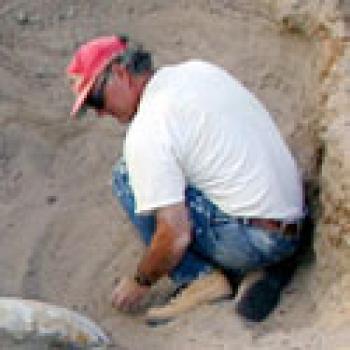
Gary Morgan
Curator of Paleontology
Gary's primary area of interest is fossil mammals from the younger half of the Cenozoic Era, about the last 35 million years of geologic time. His field and research program in New Mexico concentrates on faunal and biostratigraphic studies of Miocene, Pliocene, and Pleistocene vertebrate sites throughout the state.
Email: gary.morgan1@state.nm.us
Ongoing Projects
Ongoing projects in New Mexico include studies on Pliocene (2–5 million years old) vertebrates from the Rio Grande Valley south of Las Cruces in Doña Ana County and in the Gila River Valley north of Lordsburg in Hidalgo County; extinct free-tailed bats from medial Pleistocene (200,000 years old) cave deposits in Slaughter Canyon Cave in Carlsbad Caverns National Park; and fossil vertebrates associated with Paleoindian artifacts from late Pleistocene deposits (11,000–12,000 years old) in Sandia Cave in the Sandia Mountains near Albuquerque. Other current projects outside of New Mexico include work on complete late Quaternary (5,000–10,000 years old) skeletons of giant land tortoises, crocodiles, and extinct birds from submerged sinkholes on the island of Abaco in the Bahamas; early Miocene (15 million years old) rhinos, horses, oreodonts, turtles, and crocodiles from recent excavations along the Panama Canal in Panama; Pleistocene mammals (500,000 years old) from Sonora in northwestern Mexico; and Oligocene and Miocene (20–30 million years old) bats from Florida and Nebraska.
Selected Publications
- Morgan, G.S. 2005. The Great American Biotic Interchange in Florida: Bulletin of the Florida Museum of Natural History, vol. 45, no. 4, pp. 271–311.
- Morgan, G.S., and S.G. Lucas. 2005. Pleistocene vertebrate faunas in New Mexico from alluvial, fluvial, and lacustrine deposits: New Mexico Museum of Natural History and Science Bulletin, vol. 28, pp. 185–248.
- Morgan, G.S., and R.S. White. 2005. Miocene and Pliocene vertebrates from Arizona: New Mexico Museum of Natural History and Science Bulletin, vol. 29, pp. 115–136.
- Morgan, G.S., and N.J. Czaplewski. 2003. A new bat (Chiroptera: Natalidae) from the early Miocene of Florida, with comments on natalid phylogeny: Journal of Mammalogy, vol. 84, pp. 729–752.
- Morgan, G.S., and S.G. Lucas. 2003. Mammalian biochronology of Blancan and Irvingtonian (Pliocene and early Pleistocene) faunas from New Mexico: Bulletin of the American Museum of Natural History, vol. 279, pp. 269–320.
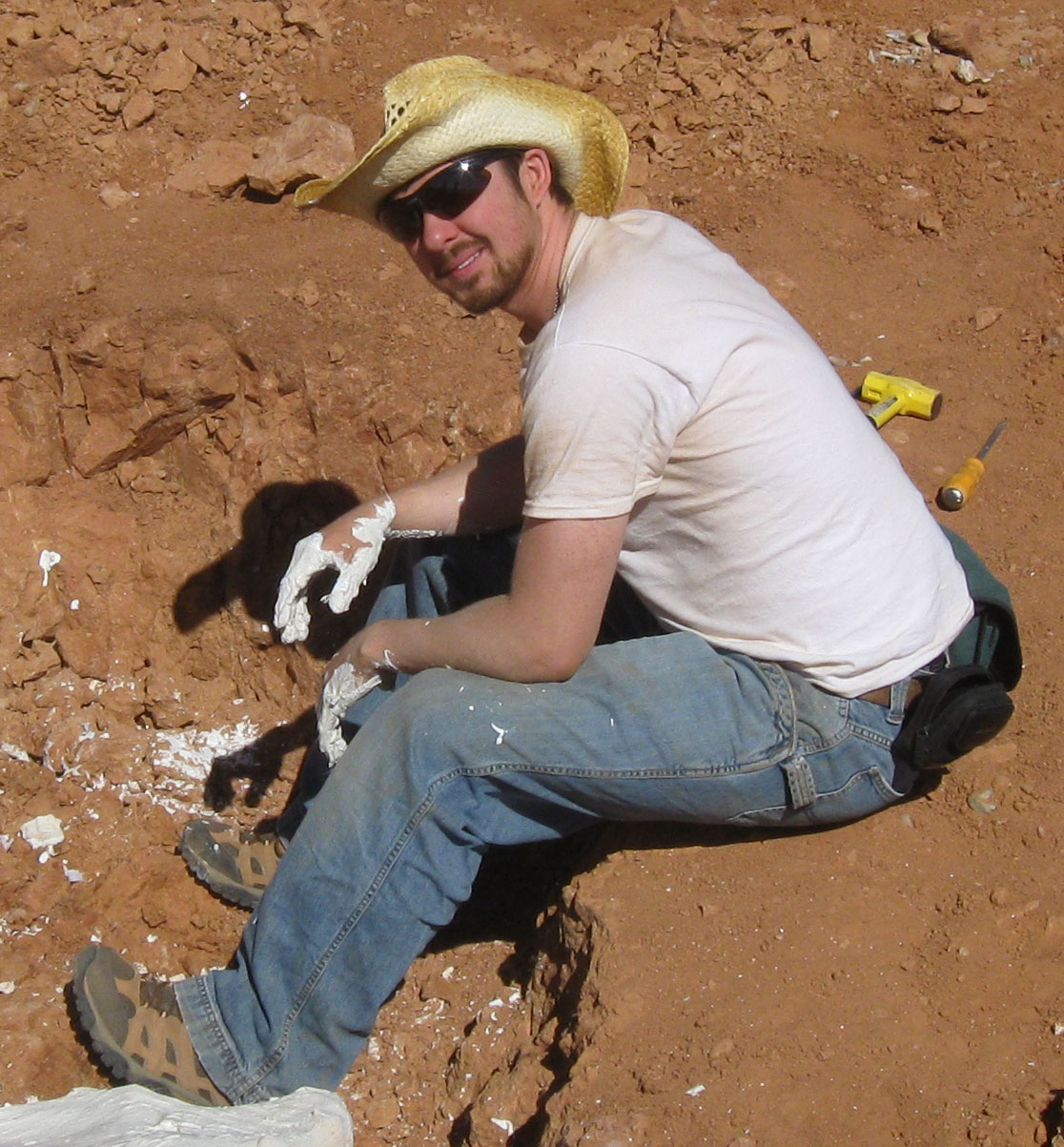
Steven E. Jasinski, Ph.D.
Curator of Paleontology
Dr. Steven Jasinski is the Curator of Paleontology at the New Mexico Museum of Natural History and Science. He has previously worked as both a curator at other museums and a university professor. His interests lie largely in fossil ecosystems, with a particular emphasis on New Mexico and the southwestern United States.
Education
Ph.D. in Paleontology – University of Pennsylvania
M.S. in Biology (Paleontology concentration) – East Tennessee State University
B.S. in Geobiology – Pennsylvania State University
Research Interests
His research largely focuses on fossil ecosystems and the animals and plants that were a part of them. He has often focused on particular groups, including dinosaurs, turtles, and carnivorous mammals, with a specific concentration on the Mesozoic ecosystems in the southwestern United States, and New Mexico in particular. His lab works on more than just taxonomy and systematics, also including biomechanics, paleoecology, behavior, ontogeny and development, and macroevolutonary trends, as well as biostratigraphy and biogeography. They often look to interweave their work through multiple disciplines, helping investigate complex issues, as well as doing the taxonomic and morphologic work that creates the foundation for many studies in paleontology and evolutionary biology.
Selected Publications
- Jasinski, Steven E. and Robert M. Sullivan. 2026. Dinevenator, a new genus of troodontid dinosaur from the Late Cretaceous of New Mexico. Fossil Studies 4(3):21. DOI: https://doi.org/10.3390/fossils4030021.
- Dalman, Sebastian G., Steven E. Jasinski, D. Edward Malinzak, Spencer G. Lucas, Martin Kundrát, and Anthony R. Fiorillo. 2025. A new saurolophine hadrosaurid (Ornithischia: Hadrosauridae) from the Upper Cretaceous (Campanian) Hunter Wash Member, Kirtland Formation, San Juan Basin, New Mexico. New Mexico Museum of Natural History and Science Bulletin 101:73–114.
- Sankhyan, Anek Ram, Sayyed Ghyour Abbas, Steven E. Jasinski, Muhammad Akbar Khan, and Khalid Mahmood. 2025. Rare carnivorous mammals from a diverse fossil assemblage from the Middle Siwaliks of Haritalyangar area, Himachal Pradesh, North India. Journal of Mammalian Evolution 32:14. DOI: https://doi.org/10.1007/s10914-025-09749-4.
- Dalman, Sebastian G., Mark A. Loewen, R. Alexander Pyron, Steven E. Jasinski, D. Edward Malinzak, Spencer G. Lucas, Anthony R. Fiorillo, Philip J. Currie, and Nicholas R. Longrich. 2024. A giant tyrannosaur from the Campanian-Maastrichtian of southern North America and the evolution of tyrannosaurid gigantism. Scientific Reports 13:22124. DOI: https://doi.org/10.1038/s41598-023-47011-0.
- Jasinski, Steven E., Sayyed Ghyour Abbas, Khalid Mahmood, Muhammad Adeeb Babar, and Muhammad Akbar Khan. 2023. New carnivoran (Mammalia: Carnivora) specimens from the Siwaliks of Pakistan and India and their faunal and evolutionary implications. Historical Biology 35(11):2217–2252. DOI: https://doi.org/10.1080/08912963.2022.2138376.
- Jasinski, Steven E., Robert M. Sullivan, Aja M. Carter, Erynn H. Johnson, Sebastian G. Dalman, Juned Zariwala, and Philip J. Currie. 2023. Osteology and reassessment of Dineobellator notohesperus, a southern eudromaeosaur (Theropoda: Dromaeosauridae: Eudromaeosauria) from the latest Cretaceous of New Mexico. The Anatomical Record 306(7):1712–1756. DOI: https://doi.org/10.1002/ar.25103.
- Jasinski, Steven E. 2023. A new species of Chrysemys (Emydidae: Deirochelyinae) from the latest Miocene-early Pliocene of Tennessee, USA and its implications for the evolution of painted turtles. Zoological Journal of the Linnean Society 198(1):149–183. DOI: https://doi.org/10.1093/zoolinnean/zlac084.
- Jasinski, Steven E., Andrew B. Heckert, Ciara Sailar*, Asher J. Lichtig, Spencer G. Lucas, and Peter Dodson. 2022. A softshell turtle (Testudines: Trionychidae: Plastomeninae) from the uppermost Cretaceous (Maastrichtian) Hell Creek Formation, North Dakota, USA, with implications for the evolutionary relationships of plastomenines and other trionychids. Cretaceous Research 135:105172. DOI: https://doi.org/10.1016/j.cretres.2022.105172.
- Dalman, Sebastian G., Spencer G. Lucas, Steven E. Jasinski, Asher J. Lichtig, and Peter Dodson. 2021. The oldest centrosaurine: A new ceratopsid dinosaur (Dinosauria: Ceratopsidae) from the Allison Member of the Menefee Formation (Upper Cretaceous, early Campanian), northwestern New Mexico, USA. PalZ (Paläontologische Zeitschrift) 95:291–335. DOI: https://doi.org/10.1007/s12542-021-00555-w.
- Jasinski, Steven E., Robert M. Sullivan, and Peter Dodson. 2020. New dromaeosaurid dinosaur (Theropoda, Dromaeosauridae) from New Mexico and biodiversity of dromaeosaurids at the end of the Cretaceous. Scientific Reports 10:5105. 10 pp. DOI: https://doi.org/10.1038/s41598-020-61480-7.
- Jasinski, Steven E. 2018. A new slider turtle (Testudines: Emydidae: Deirochelyinae: Trachemys) from the late Hemphillian (Late Miocene/Early Pliocene) of eastern Tennessee and the evolution of the deirochelyines. PeerJ 6:e4338. DOI: https://doi.org/10.7717/peerj.4338.
- Jasinski, Steven E. and Robert M. Sullivan. 2016. The validity of the Late Cretaceous pachycephalosaurid Stegoceras novomexicanum (Dinosauria: Pachycephalosauridae). New Mexico Museum of Natural History and Science Bulletin 74:107–115.
- Jasinski, Steven E. 2015. Middle Miocene Carnivora of New Mexico (Tesuque Formation): species patterns, richness, and faunal turnover. New Mexico Museum of Natural History and Science Bulletin 67:89–105.
- Jasinski, Steven E. 2015. A new dromaeosaurid (Theropoda: Dromaeosauridae) from the Late Cretaceous of New Mexico. New Mexico Museum of Natural History and Science Bulletin 67:79–87.
- Jasinski, Steven E., Robert M. Sullivan, and Spencer G. Lucas. 2011. Taxonomic composition of the Alamo Wash local fauna from the Upper Cretaceous Ojo Alamo Formation (Naashoibito Member), San Juan Basin, New Mexico. New Mexico Museum of Natural History and Science Bulletin 53:216–271.
- Jasinski, Steven E. and Robert M. Sullivan. 2011. Re-evaluation of pachycephalosaurids from the Fruitland-Kirtland transition (Kirtlandian, late Campanian), San Juan Basin, New Mexico, with a description of a new species of Stegoceras and a reassessment of Texacephale langstoni. New Mexico Museum of Natural History and Science Bulletin 53:202–215.
- Jasinski, Steven E. 2011. Biomechanical modeling of Coelophysis bauri: possible feeding methods and behavior of a Late Triassic theropod. New Mexico Museum of Natural History and Science Bulletin 53:195–201.
Visit
Get tickets and plan your next visit.
Exhibitions
Explore New Mexico’s natural and scientific wonders.
Learn
Dig deeper with programs and resources for all ages.
Research & Collections
Learn more about the science that powers our museum.
Get Involved
Become a part of our community.